
Friendship & Relationship Development


Help guide social learners in some of the most significant learning of their lives
Friendship seems so easy and natural to those who make friends easily—but to those who find it challenging, it’s neither simple, logical, or predictable! All functional relationships—including friendship—require a range of social competencies, such as executive functioning & organizational skills, perspective taking, flexible thinking, understanding feelings & emotions, and many more.
How do we crack open this treasure chest to make the most coveted, yet complex facet of relationship development explicit and accessible to our children, students, and clients who struggle to form gratifying emotional relationships with their peers, colleagues, and others they simply share space with?
Quick Links
- Digital Downloads
- Best-Selling & Award-Winning Products
- On Demand Courses
CEs available for select professionals - Free Stuff for Home & School
Articles, Video Lessons, Webinar, Thinksheet - What is Social Thinking?

Products on Friendship & Relationship Development for Developmental Ages
Digital Downloads
Ages 4-8
Ages 9-12

Ages 13-18+

On Demand Courses—Practical Strategies You Can Use Right Now
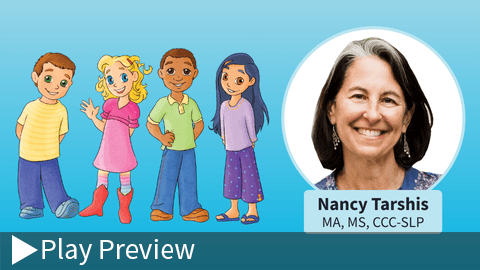
Teaching the We Thinkers! Curriculum Series with Fidelity: A Short Course
This short 2-hour course is designed to give educators, therapists, and parents/caregivers an understanding of the We Thinkers! series, a metacognitive curriculum for 4- to 7-year-olds. It introduces social cognitive concepts; strategies for implementing the series with fidelity, including engineering the environment, pacing, and playing with the concepts; and highlights key components of social thinking, group formulation, and service delivery. Lessons are story-based, games oriented, and support inquiry-based learning using hands-on, multisensory teaching tools. The 90-day Recorded Replay Access begins at the time of Registration.
Download this free infographic on building social competencies for early learners.

2 hours of training and CE credit available for select professionals.
Combating Loneliness and Misbehavior
Download this free visual with practical ideas for initiating social conversations, which Michelle Garcia Winner presents in this course.
Loneliness is a dangerous national epidemic that has been growing in depth and complexity for many years. Loneliness not only endangers our mental and physical health, but it also can make us less kind and caring toward others, resulting at times in misbehavior at schools and within our communities. We’ll explore a range of research-informed ways we can cultivate meaningful relationships with others to foster our well-being, as well as kindness, empathy, and generosity of spirit toward others. Now more than ever, building social awareness, managing anxiety, and developing social communication strategies to combat this growing crisis of loneliness is critical for school-age children, tweens and teens, and all the way through the adult years. The 90-day Recorded Replay Access begins at the time of Registration.
1.5 hours of CE credit available for select professionals.
Free Stuff for Home & School
Free Video Lesson

Michelle Garcia Winner, MA, CCC-SLP
Watch this short video mini-lesson in which Michelle Garcia Winner demonstrates how she uses magnets with her clients to help explain friendships and relationships. You can use this exercise with pre-teen, teenagers, young adults, or even adults.
Free Video Lesson
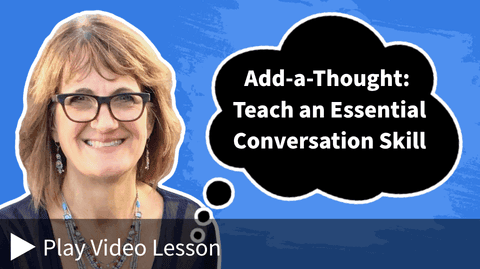
Michelle Garcia Winner, MA, CCC-SLP
Add-a-Thought is a strategy to practice conversational language by making comments about our own lives that connect to other participants’ life experiences and vice versa. This can be taught in a game type format; the goal is to keep each person’s communication connected to what someone else shared, which leads to the growth of the Conversation Tree. Strong Add-a-Thought comments require that players incorporate a host of related skills such as perspective taking, sharing an imagination, conversational timing, the amount of information shared at one time, etc.
Free Webinar
Michelle Garcia Winner, MA, CCC-SLP
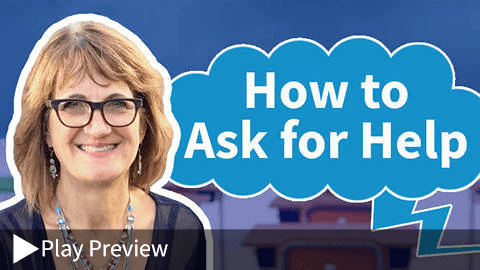
It’s human nature to want to help others, but it’s often difficult for people to ask for help, especially those with social learning differences. In this webinar, we’ll discuss why children, students, and adults may resist help or refuse to ask for it and we’ll deconstruct the multi-step process through which we ask for help. We’ll also explore the social emotional benefits for all participating in this unique and rewarding relationship.
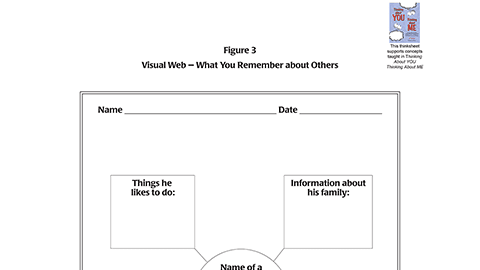
What You Remember About Others
Download this thinksheet to help students organize what they remember about others as they are getting to know someone. It provides a visual template to record information about a person, including things they like to do, family details, school or job information, and preferred foods or restaurants.
What is Social Thinking?
.png&w=1536&q=75)
Develop Social Competencies
The Social Thinking Methodology provides evidence-based strategies to help people ages four throughout adulthood develop their social competencies, flexible thinking, and social problem solving to meet their own social goals and improve:
- Conversation & social connection
- Executive functioning
- Friendship & relationship development
- Perspective taking
- Self-regulation
- Social Thinking Vocabulary
- Social Problem Solving