
Schoolwide Implementation


Social Learning Is Academic Learning
Explore practical strategies to support The Social Thinking Methodology bridges the importance of social learning with practical tools to teach it schoolwide
Now more than ever, social learning is an integral part of the academic day. The Social Thinking Methodology provides a pathway between recognizing the importance of social learning and giving practical ideas to teach it. Our methodology is for individuals with social learning differences, difficulties, or for those who could just use a few extra tools to figure out the social world. For many years we’ve been working with elementary schools around the world to bring these concepts to life in classrooms and schoolwide.
The same social thinking needed to relate effectively to others is also essential for success in academics. Central to this teaching is how students use their social mind not only to play on the playground, but also to work as part of a group, figure out what to do or say, share space with others, organize their materials, and interpret stories, relate experiences, ask for help, and more. Social thinking is critical for socially based academic tasks, such as reading comprehension, explaining one’s ideas when writing to different points of view, or giving a classroom presentation.
Our tools and materials support teaching social learning and, more specifically, self and other awareness, social interpretation, problem solving or decision making, and social responses. This all comes together to foster relationship development as well as academic skills. Our experts provide practical examples and stories of how elementary schools have implemented aspects of the Social Thinking Methodology to support these competencies in their own regions, states, and school districts. When working with schools, they can provide ideas and inspiration to:
- set up classrooms and other social learning spaces using visual supports
- use specific lesson plans during the first weeks of school
- infuse the Social Thinking Vocabulary across a school day and over time
- learn strategies for teaching social observation, shifting between and within activities, and classroom expectations
One of the benefits of schoolwide implementation is the bridge that it builds between environments and people. When classroom teachers and specialists share the same language and strategies it creates a more cohesive learning environment. We can also offer thoughts on navigating tricky group dynamics, as well share our favorite activities to kick off a new school year. We hope you'll partner with one of our experts to bring social learning through the Social Thinking Methodology to your school or clinic!

Two-Part Series on Implementing Social Thinking Schoolwide
Part 1: Social Thinking Schoolwide: Foundations, Setup, & Strategies
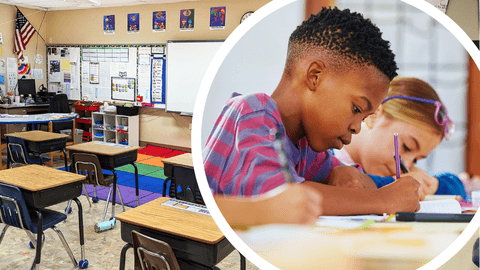
Part 1 of this two-part series explores how classrooms, schools, and districts can use concepts from the Social Thinking Methodology within their everyday learning environments. Participants will learn creative ways to design classrooms and other spaces using visual tools and supports to make abstract social concepts more understandable and accessible. From setting up the environment to selecting developmental tools, we’ll show to embed social learning to support academic learning in sustainable and practical ways. The 90-day Recorded Replay Access begins at the time of Registration.

2 hours of CE credit available for select professionals.
Part 2: Sustainable Schoolwide Strategies Using Social Thinking Materials
Part 2 in this two-part series builds upon the foundations of preparing learning environments to connect social learning to academic learning covered in Part 1. In this course, we’ll show how schoolwide or districtwide adoption and implementation of lessons and activities from the Social Thinking Methodology can create bridges between people and environments, ultimately helping student apply what they learn. The 90-day Recorded Replay Access begins on October 17, 2026.
2 hours of CE credit available for select professionals.
Free Video Library: Core Social Thinking Vocabulary
- Intro
- 1) Thoughts/Feelings
- 2) The Group Plan
- 3) Thinking With Your Eyes
- 4) Body in the Group
- 5) Listening with Brain/Body
- 6) Hidden Rules
- 7) Smart Guess
- 8) Flexible/Stuck Thinking
- 9) Size of the Problem
- 10) Sharing an Imagination

Join collaborative speakers, Ryan Hendrix and Kari Zweber Palmer as they introduce you to the Social Thinking Vocabulary (STV). STV is a structured, language-based system designed to translate abstract social concepts into concrete, teachable terms. This methodology provides a common language for individuals, educators, and caregivers to talk about what it means to "be social" and how the social world works across various contexts. The primary goal of the STV is to activate a deeper social awareness and cognitive understanding that ultimately improves social competency and problem-solving skills.
Supporting Schoolwide Implementation Video Library
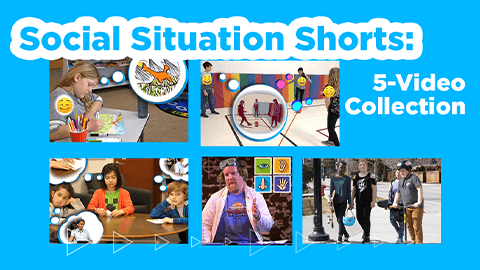
Social Situation Shorts: 5 Key Social Thinking Vocabulary Concepts in Action
Social Situation Shorts, a set of five video vignettes, featuring real kids in real-world social situations using their social thinking and social skills. These teaching videos are perfect for fostering discussions and engaging young students or clients with relatable social situations. For kids between the ages of 5-9+.
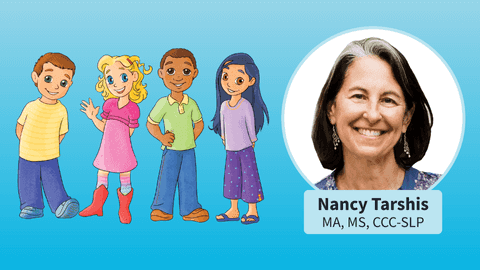
Teaching the We Thinkers! Curriculum Series with Fidelity: A Short Course
This short 2-hour course is designed to give educators, therapists, and parents/caregivers an understanding of the We Thinkers! series, a metacognitive curriculum for 4- to 7-year-olds. It introduces social cognitive concepts; strategies for implementing the series with fidelity, including engineering the environment, pacing, and playing with the concepts; and highlights key components of social thinking, group formulation, and service delivery. Lessons are story-based, games oriented, and support inquiry-based learning using hands-on, multisensory teaching tools.

Teaching the Superflex Curriculum Series with Fidelity: A Short Course
This short course will focus on the theory underlying core lessons and how to implement a detective and superhero themed social, emotional, and academic learning (SEAL) teaching series with fidelity. Consider this to be the essential crash course for implementing the Dynamic Duo Curriculum series with fidelity. Content is designed for students 7-11+ years.
Articles to Support Learning
Using Social Thinking in the Mainstream Classroom
The Social Thinking Methodology began over 25 years ago in schools to address the lack of practical ways to teach social emotional concepts to neurotypical and neurodivergent students. Today, its strategies are used in mainstream classrooms, supporting all students with a shared language for understanding the social emotional world.
The Social Thinking–Social Competency Model (ST-SCM)
Have you ever wondered how do we know what to do or say in a given situation? The Social Thinking-Social Competency Model breaks down this big, complex process into four foundational steps.
Connect with Our Experts
If you're thinking about embedding parts of the Social Thinking Methodology into your classroom, school, or district, why not partner with one of our expert trainers? This team of professionals, led by Michelle Garcia Winner (founder of Social Thinking) and Dr. Pamela Crooke, represent regions around the US and world. These trainer can provide customized full day, 1/2 day, or on-going hourly coaching.

Michelle Garcia Winner
Founder & CEO, Social Thinking • MA, CCC-SLP

Pamela Crooke
PhD, CCC-SLP • Co-developer of the Social Thinking® Methodology • Chief Operations Officer

Kari Zweber Palmer
MA, CCC-SLP

Ryan Hendrix
MS, CCC-SLP

Nancy Clements
MA, CCC-SLP

Nancy Tarshis
MA, MS, CCC-SLP

Renee Attaway-Storer
MS, CCC-SLP

Beckham Linton
MA, CCC-SLP

Ariela Jokel
PhD, CCC-SLP

Chithra Kathiresan
B. App. Sc., SLP
Social, Organizational, and Academic Learning Across the Ages
The teachings of the Social Thinking Methodology help people understand themselves and others to better navigate the social world, foster relationship development, and improve performance at school, at home, and at work. Our unique tools break down complex social executive functioning concepts (like perspective taking) into understandable and doable parts that can be applied across settings. For more than 25 years, our experts have been a guiding resource for schools, clinics, individuals, and families around the world, and our teachings continually evolve based on the latest research, clinical insights, and input from the community. Whether you're supporting the goals of individuals with a diagnosis (ADHD, social communication differences, social anxiety, autism levels 1 and 2) or with no diagnosis but unmet social goals—our strategies can help you help them.
We stand committed to providing quality, practical information that is rooted in research, built upon real-world experiences, and is responsive to the needs of the people for whom it is designed to support. We are constantly learning and gaining inspiration from our clients and others we meet, so our work is ever-evolving yet remains grounded in its adherence to rigorous standards of quality.
Social Thinking (Think Social Publishing, Inc.) publishes its own educational products, gives conferences around the world, offers online training courses, and provides a large library of free articles and webinars on our website. Our award-winning curricula have been implemented in specialized and mainstream classrooms, schoolwide, districtwide, in homes, and clinics around the world.
Social Thinking IS Academic Thinking
Academics Are Rooted in Social Thinking
How is the Social Thinking Methodology different from every other social and emotional learning program?
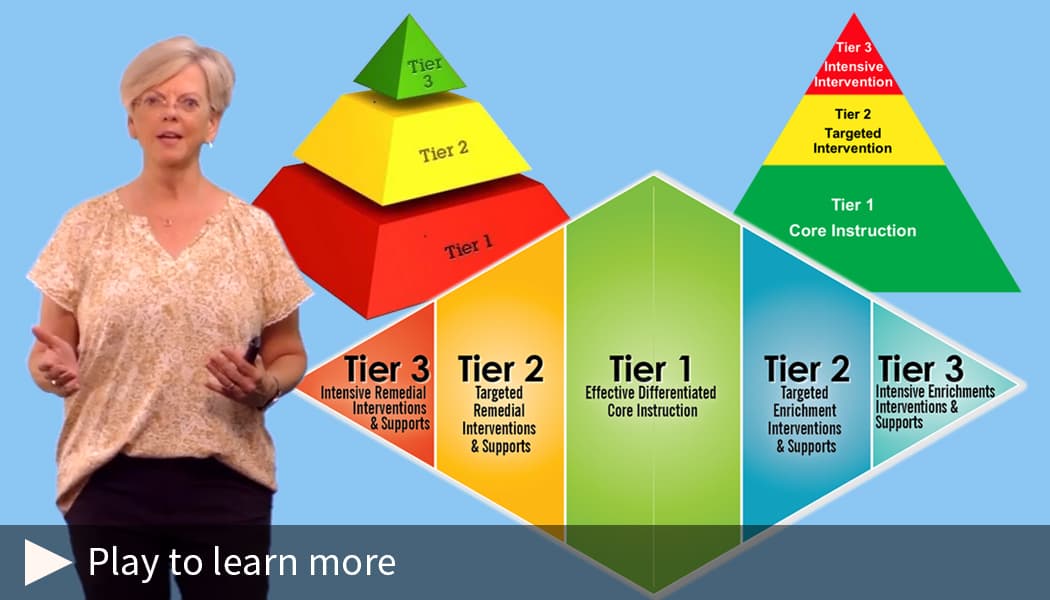
Lessons, strategies, curricula, and tools can cross all three tiers of support
It is designed to complement and embed into academic lessons
It is accessible to general education and special education
It uses visual supports and consistent vocabulary to make abstract social ideas clear and concrete
It avoids assumptions that all learners will learn in the same way
Social thinking is our meaning maker
Social thinking is the process by which we interpret the thoughts, beliefs, intentions, emotions, knowledge, and actions of another person along with the context of the situation to understand that person’s experience. If we are engaging or sharing space with another person, we use this information to determine how to respond to affect the thoughts that person has about us to achieve our social goals (such as being friendly to maintain a friendship, acting generous to impress a date, and seeming unfriendly to deflect attention when walking alone late at night, etc.). Social thinking is our meaning maker—it allows us to interpret the deeper meaning behind what others do in the world, and (if the situation calls for it) prompts us with how to respond. A person’s social thinking strength has a considerable effect on their relationships and success in school and at work. It affects the person’s social skills, perspective taking, self-awareness, self-regulation, critical thinking, social problem solving, play skills, reading comprehension, written expression, ability to learn and work in a group, organizational skills, etc.
Social Thinking Deeply Connects Social, Emotional & Academic Learning
The Social Thinking Methodology has been a guiding resource for schools, clinics, individuals, and families around the world for more than 25 years. Our resources are developed by experts in speech and language (SLPs) specializing in social cognition and dedicated to helping people of all ages reach their social goals. Instead of focusing on mastering social skills, we teach social competencies for lifelong learning, so individuals can make progress toward their self-determined goals.
Teachers, speech-language pathologists, counselors, caregivers, and therapists just like you have used our evidence-based lessons & strategies to teach people how to improve their social competencies, flexible thinking, and social problem solving through: conversation & social connection, executive functioning, friendship & relationship development, perspective taking, self-regulation, social problem solving, and Social Thinking Vocabulary.
Social Thinking resources deeply connect social, emotional, and academic learning for a lifetime of well-being. Our materials are helpful for students in mainstream and specialized education—they can be used in schools as part of Tiers 1, 2, and 3 support. Explore our broad range of resources by developmental age below.