
Free Article


Teaching Social Thinking and Real-World Communication
Michelle Garcia Winner, MA, CCC-SLP & Pamela Crooke, PhD, CCC-SLP
Summary:
- The Social Thinking Metholodgy provides everyday tools to help kids and adults navigate an unpredictable social world without needing to be perfect.
- Complex social interactions are broken down into teachable steps so students can learn hidden rules and manage their stress.
- You will find simple frameworks that guide kids in making friends, joining activities, and building a supportive community.
The social world is messy and unpredictable, none of us get it right all the time. Idioms like “I put my foot in my mouth” remind us that mistakes are normal. With so much anxiety around social interactions today, it helps to remember: the goal isn’t perfection.
The Social Thinking® Methodology (STM) gives kids, teens, and adults tools to understand what’s happening in social situations, why it matters, and how to make choices that support their own social goals. It teaches how the social world works so people can better navigate and regulate within it. At its core is metacognitive awareness; being able to notice your own thoughts and feelings and consider those of others. STM aligns well with CASEL’s five SEL areas (self awareness, social awareness, self management, responsible decision making, and relationship skills). Our work supports each of these in very practical ways.
Understanding Our Emotions
Historically, social learning happened naturally through everyday interactions. Today’s classrooms still offer that mix of shared space, shared goals, and community but stress and anxiety can make it harder for students to engage. We talk about healthy range of emotions people experience every day. Kids and adults don’t live in extremes; most feelings are mild or moderate. But we tend to talk about emotions only when they’re intense or negative. This can unintentionally feed negativity. To balance this, we encourage students to notice positive moments, practice gratitude, and talk about what’s going well—not just what’s stressful.
Learning the Social Code
Everyone shifts between “home rules” and “community rules.” Understanding the social code, sometimes called “hidden rules,” helps students self regulate, notice others, and work in groups. Some students pick this up intuitively, while others benefit from explicit teaching. STM lessons use simple visuals and frameworks. For example:
- Five Steps of Being With Others helps kids understand what their bodies, eyes, and thoughts are doing in a group.
- Social Emotional Chain Reaction shows how what we do and say (or don’t do or say) affects one another.
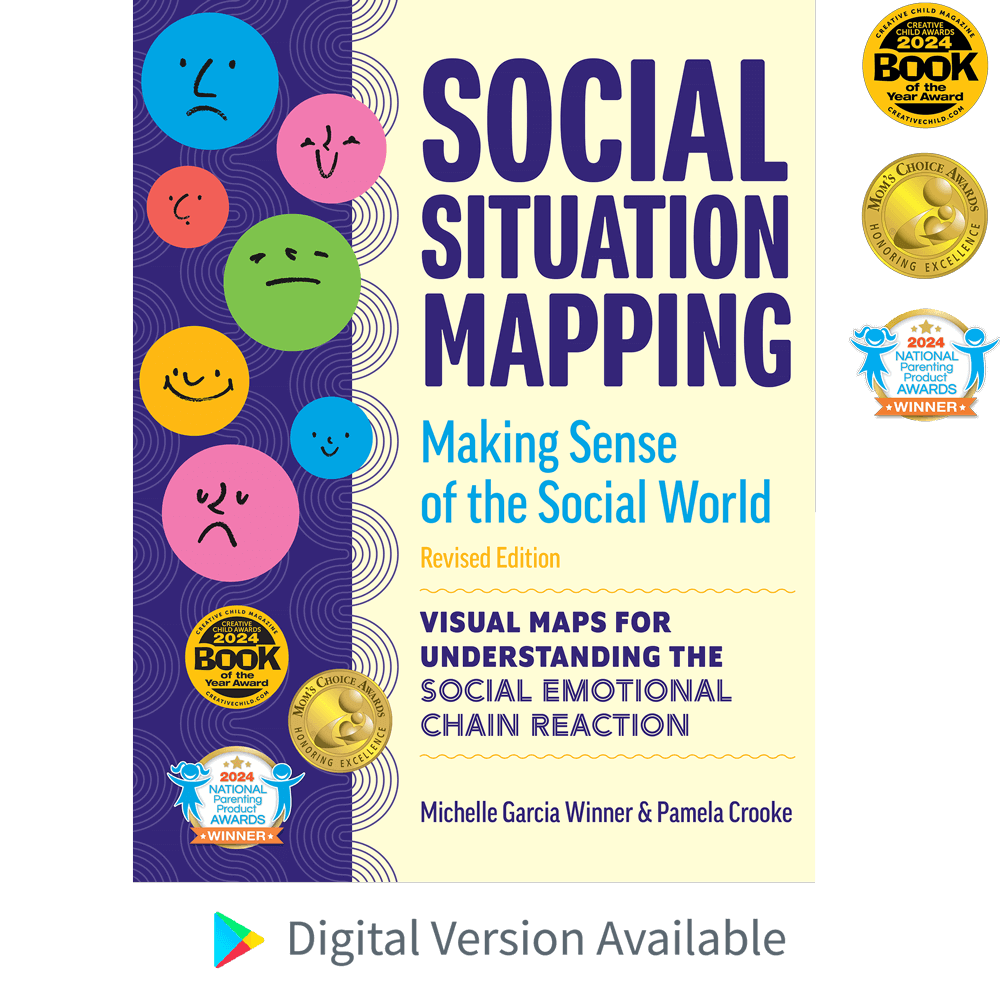
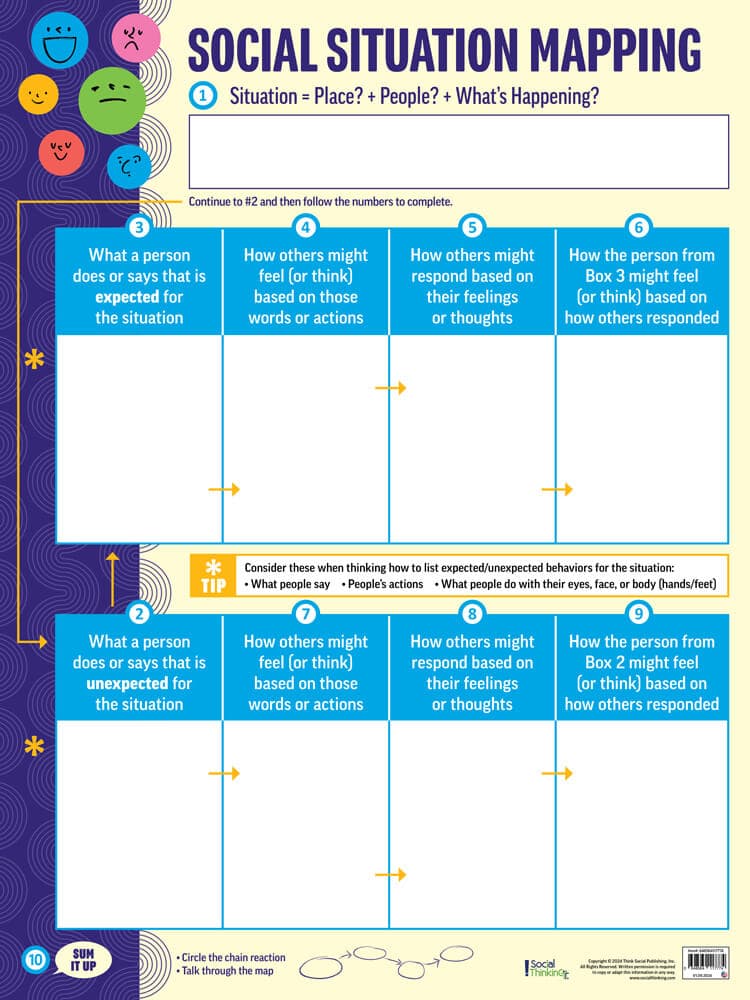
- Social Situation Mapping helps students understand that situations (where we are, who is around, and what’s happening) are what drive social expectations. Mapping helps to explain this.
- We also emphasize that discomfort is something we all have. Stress doesn’t mean “stop,” it means “notice and manage.” Instead of trying to remove all discomfort, we teach kids how to stay in the situation and keep going even when it’s tricky.
Friendship, Screens, and Social Connection
Students often ask what friendship really is. Our six-level friendship framework helps them understand how relationships grow from greeting, to acquaintances, to situational friends, all the way to close friends. Most people have only a few close friends, and that’s pretty common.
Building Community in Classrooms
Social learning is now more important than ever. Learning happens through relationships. The Four Steps of Communication—thinking about others, moving your body, using your eyes, and using language help kids understand how groups form and how to join them. (And yes, you can participate without speaking!) Students also need guidance on how to join groups: noticing who’s available, moving toward them, showing interest with their eyes and body, and using language once they’re there. These are the little social risks that build confidence.
Our Social Thinking Vocabulary, like brain in the group, body in the group, hidden rules, thinking with our eyes, sharing imagination, and more, gives kids shared language to understand what to do (or not do) and reflect on their choices. Older students use it for problem solving and pursuing their personal social goals.
Our on demand course called Small Talk & Conversation helps students understand why we engage in social exchanges like small talk and provides strategies to unpack the complexities of this dynamic and unscripted type of communication.
Closing
The Social Thinking Methodology (STM), through its teachings, frameworks, and products, supports individuals across the life span to build self-awareness and personal strategies that strengthen their social understanding, confidence, and ability to make choices that foster their connection to community.
Thanks for reading! Join our community and be the first to hear about our latest products, articles, and more!
Related Resources to Support the Concepts in This Article
Products & Curriculum Sets
Free Articles
On Demand Courses
Strategies to Demystify Conversational Complexities